Articles
At Cataclesia Forum:
Genesis 1-11 as Introduction and Paradigm
The Canaanite Conquest and a Pattern of Judgment
__
The Relationship Cycle in the Wilderness
In an earlier article, I explored the proposal that Genesis 1-11 debuts a recognizable cycle of relationship between God and people. As readers encounter each iteration, we may find evidence that in biblical narrative, though people fail, God persists in acting to preserve opportunity for relationship with him.
In Genesis 1-2, God transforms first a watery, then a dry waste into a fruitful land, where he places a man and woman in anticipation of relationship. When they violate his instructions for life in the fruitful land, he exiles the man to work the wilderness ground from which he was formed. Their descendants become increasingly corrupt until “the land was ruined” and “every thought of every man was evil all the time.” The opportunity for rest and relationship in a fruitful land is no longer feasible without renewal, which leads to another iteration of judgment in Genesis 6 with the flood.
In the book of Exodus, the Israelites’ time in the wilderness begins when they pass through another flood, the Reed Sea, as it parts with the wind of God (Exodus 14). The Israelites and mixed multitude who exit Egypt are the remnant God preserves through the judgment he brings on the Egyptians for, among other things, enslavement and murder of Israelites.
As with Adam and Eve, Noah, and Abraham, God desires relationship with this people and, in the wilderness, begins to give them guidance to maintain it. As with their forefathers, the people quickly begin to doubt God and act to oppose him.
The wilderness narratives include a series of abbreviated relationship cycles, less developed than in Genesis’s narratives, missing some elements, yet recognizable if we take the time to look.
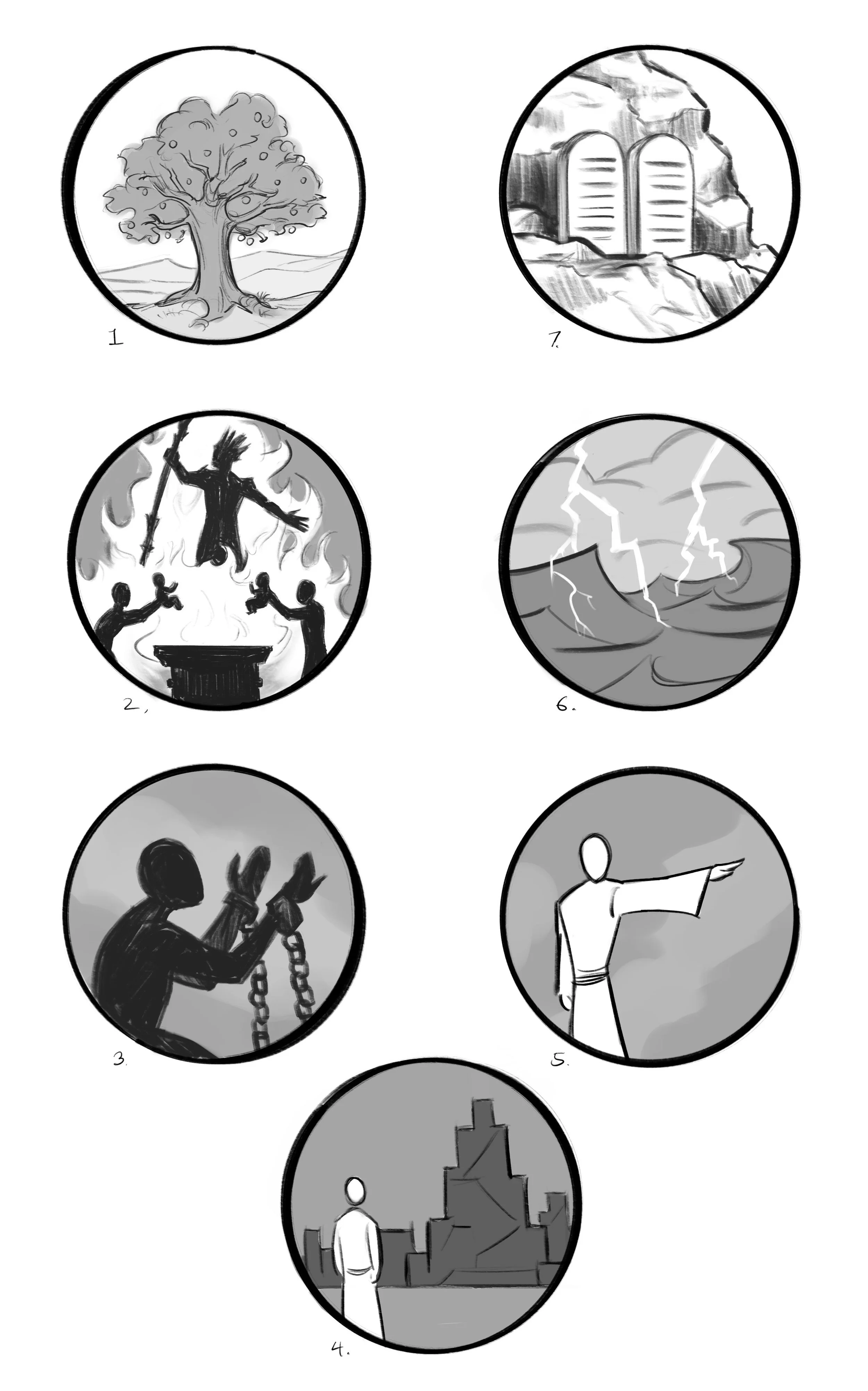
Image credit: Benlin Alexander
We can identify recurring elements of a relationship cycle beginning in the early chapters of Genesis.
Formation – God forms man in the wilderness, places him in a fruitful land, and gives him instruction for continuing life, relationship, and rest there.
Opposition – People actively oppose his guidance, which yields corruption, severed relationship with God, and the destruction of the land.
Plea – Oppressed people cry out to God—God sees or hears.
Investigation – God comes down to evaluate.
Decision – God declares what he will do in response.
Sentence – God brings judgment, often in the form of de-creating or subverting some element of Genesis 1-2, yet preserves a remnant he will restore to the fruitful land.
Instruction – God makes a covenant or gives new instruction, often responding to the actions that earlier led to judgment.
(quotations from the NET Bible)
Exodus 15 – Bitter Water
1-“They went out to the wilderness.”
2-“...the people murmured against Moses.”
3-“He cried out to the Lord.”
6- “...the Lord showed him a tree. When Moses threw it into the water, the water became safe to drink.” And“Then they came to Elim, where there were twelve wells of water and seventy palm trees, and they camped there by the water.”
7-“There, the Lord made for them a binding ordinance.”
__
This first significant incident after the exodus from Egypt includes most of the major elements of the cycle. It leaves out the arrival of God’s immediate presence, and God withholds punitive judgment.
Exodus 16 – Manna
1-“...the entire company of Israelites came to the wilderness of Sin.”
2-“The entire company of Israelites murmured against Moses and Aaron in the wilderness.”
4-“Then the Lord said to Moses, ‘I am going to rain bread from heaven for you, and the people will go out and gather the amount for each day, so that I may test them. Will they walk in my law or not?’” And “As Aaron spoke to the whole community of the Israelites and they looked toward the wilderness, there the glory of the Lord appeared in the cloud, and the Lord spoke to Moses.”
5-“I have heard the murmurings of the Israelites. Tell them, ‘During the evening you will eat meat, and in the morning you will be satisfied with bread, so that you may know that I am the Lord your God.’”
6, 7- God provides fruitfulness/sustenance and gives instruction. “I have heard the murmurings of the Israelites. Tell them, ‘During the evening you will eat meat, and in the morning you will be satisfied with bread, so that you may know that I am the Lord your God.’” And “This is what the Lord has commanded…”
__
This instance leaves out oppressed people crying out to God and punitive judgment. God appears to immediately respond to the people’s grumbling and tells Moses what he will do in response.
Exodus 17 – Rephidim
1- In the wilderness, “they pitched camp in Rephidim. Now there was no water for the people to drink.”
2.-“...the people contended with Moses…they murmured against Moses.”
3.-“Moses cried out to the Lord.”
5, 7- God provides sustenance and gives instruction. “The Lord said to Moses, ‘Go over before the people…and you will strike the rock, and water will come out of it so that the people may drink.’” And after the conflict with the Amalekites later in the chapter, God gives further instruction.
__
Once again, God does not explicitly punish the people. Although one could interpret the Amalekites’ attack as a response to the Israelites’ unbelief, there is no clear textual support for the idea.
Exodus 32 – Golden Calf
1- Previously, in Exodus 19:2, “they came to the desert of Sinai, and they camped in the desert; Israel camped there in front of the mountain.”
2-“When the people saw that Moses delayed in coming down from the mountain, they gathered around Aaron and said to him, ‘Get up, make us gods that will go before us...’”
3, 4- God observes and sends Moses in his stead. “The Lord spoke to Moses, ‘Go quickly, descend, because your people, whom you brought up from the land of Egypt, have acted corruptly. They have quickly turned aside from the way that I commanded them…’”
3, 5.- The Lord said to Moses, ‘I have seen this people. Look what a stiff-necked people they are! So now, leave me alone so that my anger can burn against them and I can destroy them, and I will make from you a great nation…’ But Moses sought the favor of the Lord his God…Then the Lord relented over the evil that he had said he would do to his people.”
6- God tells Moses to lead the people into the promised land, even as he indicates he will judge those who are rebellious. “‘So now go, lead the people to the place I have spoken to you about. See, my angel will go before you. But on the day that I punish, I will indeed punish them for their sin.’ And the Lord sent a plague on the people because they had made the calf—the one Aaron made.”
7-“Moses turned and went down from the mountain with the two tablets of the testimony in his hands…Now the tablets were the work of God, and the writing was the writing of God, engraved on the tablets.”
__
In this passage, Moses is an exemplar of Genesis 1’s “the image of God,” acting as God’s representative to his people and as an intercessor on behalf of the people to God. God observes and sends Moses to descend. God sees and plans to judge decisively until Moses intercedes. The people, on the other hand, go far beyond merely complaining. They compel Aaron to create an alternate god, celebrate, and worship it. In response, God finally does assess punitive action, and it is severe. God’s new instruction includes the Ten Commandments.
Leviticus 10 – Nadab and Abihu
1- The setting is the Sinai wilderness in the newly constructed Tabernacle, full of Eden-like imagery, and, like Eden, a place where God meets with people.
2- “Aaron’s sons, Nadab and Abihu, each took his fire pan and put fire in it, set incense on it, and presented strange fire before the Lord, which he had not commanded them to do.”
6- “...fire went out from the presence of the Lord and consumed them so that they died before the Lord.”
7- The chapters that follow in Leviticus provide regulations governing relationship between the people, especially the priests and Levites, and God, and can be read as God’s instructional response to Nadab and Abihu’s shocking mismanagement of the relationship.
__
The High Priest Aaron’s own sons flagrantly disregard God’s guidance for the Tabernacle ceremony. Without warning, fire emerging from God’s tent residence burns them to death. Although the connection may not be obvious in a linear reading, the pattern evident in the relationship cycle suggests the following chapters detailing the duties of priests and Levites are intentionally placed to be interpreted as protection against similar consequential transgressions of the people’s relationship with God.
Numbers 11a – Fire
1- The setting is three days' journey from the mountain of the Lord, still in the Sinai wilderness.
2-“When the people complained, it displeased the Lord.”
3, 6- “When the Lord heard it, his anger burned and so the fire of the Lord burned among them and consumed some of the outer parts of the camp.”
3- “When the people cried to Moses, he prayed to the Lord, and the fire died out.”
__
In this abbreviated iteration, the people complain but quickly repent. God’s response is punitive judgment, but he quickly relents. It may be significant that this episode of slow-moving fire on the outskirts of the camp follows Nadab and Abihu’s no-warning destruction by fire, which emanated from the Tabernacle at the camp’s center.
Numbers 11b – Quail
1- The setting is three days' journey from the mountain of the Lord, still in the Sinai wilderness.
2-“Now the mixed multitude who were among them craved more desirable foods, and so the Israelites wept again and said, ’If only we had meat to eat! We remember the fish we used to eat freely in Egypt, the cucumbers, the melons, the leeks, the onions, and the garlic. But now we are dried up, and there is nothing at all before us except this manna!’”
3-“When the Lord heard it, his anger burned.” And “Moses said to the Lord, ‘Why have you afflicted your servant?’”
4, 5, 7-“The Lord said to Moses, ‘Gather to me seventy men of the elders of Israel, whom you know are elders of the people and officials over them, and bring them to the tent of meeting; let them take their position there with you. Then I will come down and speak with you there, and I will take part of the Spirit that is on you, and will put it on them, and they will bear some of the burden of the people with you, so that you do not bear it all by yourself.’”
6-“...a wind went out from the Lord and brought quail from the sea, and let them fall near the camp…But while the meat was still between their teeth, before they chewed it, the anger of the Lord burned against the people, and the Lord struck the people with a very great plague.”
__
This passage emphasizes “the mixed multitude,” who were likely non-Israelite inhabitants of Egypt who chose to leave with the Israelites. In response to their grumbling, God places his spirit on many leaders to relieve the burden on Moses and provides quail for the people to eat. For the first time, the people’s grumbling leads to punitive judgment, “a very great plague.”
Numbers 12 – Miriam and Aaron
1- The setting is Hazeroth, apparently in the Sinai wilderness.
2-“Miriam and Aaron spoke against Moses because of the Cushite woman he had married... They said, ‘Has the Lord spoken only through Moses? Has he not also spoken through us?’”
3-“...the Lord heard it.”
4-“...the Lord came down in a pillar of cloud and stood at the entrance of the tent.”
5, 6-“The Lord said, ‘Hear now my words: If there is a prophet among you, I the Lord will make myself known to him in a vision; I will speak with him in a dream. My servant Moses is not like this; he is faithful in all my house. With him I will speak face to face, openly and not in riddles, and he will see the form of the Lord. Why then were you not afraid to speak against my servant Moses?’ The anger of the Lord burned against them, and he departed. After the cloud had departed from above the tent, there was Miriam, leprous like snow.”
7-“The Lord said to Moses, ‘If her father had only spit in her face, would she not have been disgraced for seven days? Shut her out from the camp seven days, and afterward she can be brought back in again.’ So Miriam was shut outside of the camp for seven days...”
__
In this iteration, Aaron and Miriam, each with significant roles in mediating the relationship between God and the people, are the offenders. God hears, comes down, says what he will do, and assesses a punishment on Miriam alone. This may be because Aaron holds the position of High Priest and similarly punishing him would compromise the relationship between God and the people or because God assessed a difference between Miriam’s and Aaron’s offense that is not clear in the text. Regardless, this is an interesting instance of a relationship cycle involving two people.
Numbers 14 – Key leaders and people reject the fruitful land
1- The setting is the wilderness of Paran and key leaders returning with fruit from and information about the land of Canaan.
2“...the Israelites murmured against Moses and Aaron, and the whole congregation said to them, ‘If only we had died in the land of Egypt, or if only we had perished in this wilderness! Why has the Lord brought us into this land only to be killed by the sword, that our wives and our children should become plunder? Wouldn’t it be better for us to return to Egypt?’ So they said to one another, ‘Let’s appoint a leader and return to Egypt.’”
3-“Moses and Aaron fell down with their faces to the ground before the whole assembled community of the Israelites. And Joshua son of Nun and Caleb son of Jephunneh, two of those who had investigated the land, tore their garments. They said to the whole community of the Israelites, ‘The land we passed through to investigate is an exceedingly good land. If the Lord delights in us, then he will bring us into this land and give it to us—a land that is flowing with milk and honey. Only do not rebel against the Lord, and do not fear the people of the land, for they are bread for us. Their protection has turned aside from them, but the Lord is with us. Do not fear them!’”
4-“...the glory of the Lord appeared to all the Israelites at the tent of meeting.”
5-“The Lord said to Moses, ‘…I will strike them with the pestilence, and I will disinherit them—I will make you into a nation that is greater and mightier than they!’ Moses said to the Lord, ‘…Please forgive the iniquity of this people according to your great loyal love, just as you have forgiven this people from Egypt even until now.’”
6-“Then the Lord said, ‘I have forgiven them…But…they will by no means see the land that I promised…Only my servant Caleb, because he had a different spirit and has followed me fully—I will bring him into the land where he had gone, and his descendants will possess it.’” And “The men whom Moses sent to investigate the land, who returned and made the whole community murmur against him by producing an evil report about the land, those men who produced the evil report about the land, died by the plague before the Lord.” And “the Amalekites and the Canaanites who lived in that hill country swooped down and attacked [Israelites who attacked them without God’s permission] as far as Hormah.”
7- Numbers 15 includes rules for sacrifices with a focus on firstfruits, intentional and unintentional sin, and the prescription to wear tassels/tzit-tzit as a reminder of the commandments.
__
This is a pivotal instance in which the people arrive at the edge of the land promised to their ancestor, Abraham, hundreds of years earlier. They send out key leaders to gather intelligence on it, and, learning of its challenges, threaten to kill the mediators of the relationship between God and the people. They reject the land God desires for them and choose instead to return to Egypt.
God’s project for rest and relationship in the fruitful land cannot proceed if they are successful, so he intervenes and tells them all but a two-person remnant of this generation will die in the wilderness. There is immediate punitive judgment for the leaders who went up into the land and returned to give a bad report – they die by plague. Some of the Israelites recognize what they have lost by failing to accept God’s purpose, then attempt to achieve it in their own strength. They arguably also experience punitive judgment through military defeat. Finally, the generation that has refused to go into the land gradually dies in the wilderness over a period of decades.
The new law God gives following this incident includes rules for sacrifices, ways to maintain the relationship including after transgressions, and, recalling the rainbow of the flood story, a sign. This one is to be worn on their bodies. After a short story in which a man is caught gathering sticks on the Sabbath and executed at Moses’s command, God prescribes tassels including blue thread, possibly evocative of the sky or the waters, on the corners of their garments to remind them of the commandments, so they can “be holy to…God.”
Numbers 16 -17 – Korah
1- Assuming the wilderness narratives are in chronological order, the setting is likely the wilderness of Paran in the Sinai desert south of Canaan. This generation has lost the opportunity to go into the fruitful land.
2-“Now Korah…took men and rebelled against Moses, along with some of the Israelites, 250 leaders of the community, chosen from the assembly, famous men
3-“When Moses heard it he fell down with his face to the ground.” And “Moses was very angry, and he said to the Lord, ‘Have no respect for their offering! I have not taken so much as one donkey from them, nor have I harmed any one of them!’”
4-“...the glory of the Lord appeared to the whole community.”
5-“The Lord spoke to Moses and Aaron: ‘Separate yourselves from among this community, that I may consume them in an instant.’ Then they threw themselves down with their faces to the ground and said, ‘O God, the God of the spirits of all people, will you be angry with the whole community when only one man sins?’
So the Lord spoke to Moses: ‘Tell the community: ‘Get away from around the homes of Korah, Dathan, and Abiram…’’”
6-“...the ground that was under them split open, and the earth opened its mouth and swallowed them, along with their households, and all Korah’s men, and all their goods. They and all that they had went down alive into the pit, and the earth closed over them. So they perished from among the community…Then a fire went out from the Lord and devoured the 250 men who offered incense.”
“14,700 people died in the plague.”
7- God establishes Aaron and his descendants as priests and the Levites as responsible for the care of the Tabernacle. “I myself have chosen your brothers the Levites…to perform the duties of the tent of meeting. But you and your sons with you are responsible for your priestly duties…I give you the priesthood as a gift for service, but the unauthorized person who approaches must be put to death.”
__
Moses’s relatives rebel against his and Aaron’s authority. Moses communicates the problem to God. God appears to the community and declares what he will do. God sends a threefold punitive judgment. The earth swallows some rebels – “they…went down alive into the pit.” Fire consumes others, and a plague kills many more.
Numbers 20 – Meribah
1-“...the entire community of Israel entered the wilderness of Zin in the first month, and the people stayed in Kadesh… And there was no water for the community.”
2-“The people contended with Moses… ‘Why have you brought us up from Egypt only to bring us to this dreadful place? It is no place for grain, or figs, or vines, or pomegranates; nor is there any water to drink!’”
“Then Moses raised his hand, and [in a departure from God’s guidance] struck the rock twice with his staff.”
3-“So Moses and Aaron went from the presence of the assembly to the entrance to the tent of meeting. They then threw themselves down with their faces to the ground.”
4-“...the glory of the Lord appeared to them.”
5-“Then the Lord spoke to Moses: “Take the staff and assemble the community, you and Aaron your brother, and then speak to the rock before their eyes. It will pour forth its water.”
6-“…water came out abundantly. So the community drank, and their beasts drank too. Then the Lord spoke to Moses and Aaron, ‘Because you did not trust me enough to show me as holy before the Israelites, therefore you will not bring this community into the land I have given them.’”
__
In this iteration, the people grumble about water, but it is Moses who has a significant failing in God’s eyes. Moses represents God to the people but angrily lashes out at them rather than doing what God had instructed. Moses receives punitive judgment – he too will die before he can enter the promised land.
Numbers 21 – Fiery Serpents
1, 2-“…the people became impatient along the way. And the people spoke against God and against Moses, ‘Why have you brought us up from Egypt to die in the wilderness, for there is no bread or water, and we detest this worthless food.’”
6-“So the Lord sent venomous snakes among the people, and they bit the people; many people of Israel died. Then the people came to Moses and said, ‘We have sinned, for we have spoken against the Lord and against you. Pray to the Lord that he would take away the snakes from us.’ So Moses prayed for the people.”
7-“The Lord said to Moses, ‘Make a poisonous snake and set it on a pole. When anyone who is bitten looks at it, he will live.’ So Moses made a bronze snake and put it on a pole, so that if a snake had bitten someone, when he looked at the bronze snake he lived.”
__
In this instance, the people’s grumbling appears no worse than in the early days following the escape from Egypt. The seriousness and persistence of the intervening rebellions led to judgments of death by the sword, fire, plague, descent into the ground, a life sentence in the desert for the generation who escaped as adults, and the denial of entry into the land for their leaders. Here, fiery serpents attack the people after they were impatient with a lack of food and water. Many die. The people receive relief by looking at a bronze serpent. Unless an unwritten miraculous production process is in view, this unprecedented solution would have required scarce materials and many hours of labor to cast. A human-made object imbued with God’s power to heal merely by being observed is extraordinarily unusual in the Bible. It later becomes an idol for rebellious Israelites (2 Kings 18) and a reference for Jesus to describe his own purpose (John 3).
Numbers 25 – Moab and Midian
1-“...Israel lived in Shittim.” This is an unknown location, apparently east of the Jordan River across from Jericho.
2-“…the people began to commit sexual immorality with the daughters of Moab. These women invited the people to the sacrifices of their gods; then the people ate and bowed down to their gods.” And “…one of the Israelites came and brought to his brothers a Midianite woman in the plain view of Moses and of the whole community of the Israelites.”
3, 4-“When Israel joined themselves to Baal Peor, the anger of the Lord flared up against Israel.”
5-“The Lord said to Moses, ‘Arrest all the leaders of the people, and hang them up before the Lord in broad daylight, so that the fierce anger of the Lord may be turned away from Israel.’ So Moses said to the judges of Israel, ‘Each of you must execute those of his men who were joined to Baal Peor.’” And “…the Lord spoke to Moses: ‘Bring trouble to the Midianites, and destroy them, because they bring trouble to you by their treachery with which they have deceived you...’”
6-“Phinehas son of Eleazar, the son of Aaron the priest, saw it, he got up from among the assembly, took a javelin in his hand, and went after the Israelite man into the tent and thrust through the Israelite man and into the woman’s abdomen. So the plague was stopped from the Israelites. Those that died in the plague were 24,000.”
7-“The Lord spoke to Moses: ‘Phinehas son of Eleazar…‘I am going to give to him my covenant of peace. So it will be to him and his descendants after him a covenant of a permanent priesthood, because he has been zealous for his God, and has made atonement for the Israelites.’’
__
The people engage in egregious violation of God’s guidance – sexual immorality linked to idolatry. God responds with extreme punishment – hanging of the leaders (which in this context likely means impalement on a pole), execution of the participants, and a devastatingly lethal plague. Phinehas’s violent act is memorable in its audacity and explicit context. God recognizes it as a laudable act of intense commitment deserving of an enduring role for his family.
Numbers 33 – The Border of Canaan
As the Israelites prepare to enter the promised land, God gives them guidance containing elements of the relationship cycle:
“The Lord spoke to Moses in the rift valley plains of Moab along the Jordan, across from Jericho. He said: ‘Speak to the Israelites and tell them, ‘When you have crossed the Jordan into the land of Canaan, you must drive out all the inhabitants of the land before you. Destroy all their carved images, all their molten images, and demolish their high places. You must dispossess the inhabitants of the land and live in it, for I have given you the land to possess it. You must divide the land by lot for an inheritance among your families. To a larger group you must give a larger inheritance, and to a smaller group you must give a smaller inheritance. Everyone’s inheritance must be in the place where his lot falls. You must inherit according to your ancestral tribes. But if you do not drive out the inhabitants of the land before you, then those whom you allow to remain will be irritants in your eyes and thorns in your side, and will cause you trouble in the land where you will be living. And what I intended to do to them I will do to you.’’”
In what could be interpreted as judgment, God commands the destruction of idols and the displacement of the region’s inhabitants. Though it isn’t fully evident here, other passages (Exodus 23, Deuteronomy 7 and 18, and Psalm 106 in retrospect) provide rationale for viewing the Canaanites as in opposition to God’s guidance.[1] In this interpretation, the new generation of Israelites are the remnant God intends to inherit the fruitful land of Canaan. Yet he warns them that they too may lose the land if they fail to do as he tells them to.
Deuteronomy as Recapitulation
Deuteronomy 1 recalls the events in the wilderness following God’s appearance to the Israelites on Sinai until the previous generation rebelled against God at Kadesh. In an apparent act of judgment, God denied that generation entry into the land, making their descendants the remnant who would inherit the fruitful land.
Deuteronomy 2-3 recalls the Israelites’ travels between Kadesh and Moab and the defeat of peoples to the east of Canaan. Moses reiterates the boundaries of the land east of the Jordan and instructions for crossing over into Canaan to take it as their inheritance, passages we could view as the new instruction to the remnant who will inherit, continuing into Deuteronomy 4, which begins a long section recalling God’s covenant with the Israelites, his nature, and an extensive restatement of his laws for maintaining relationship, fruitfulness, and sustainable life in the new land. There are also long passages about the negative consequences of disobedience. God promises that once the people have experienced both the blessings and the curses, they will recall his promises, and he will restore them to the land he intends for them.
“Today I invoke heaven and earth as witnesses against you that I have set life and death, blessing and curse, before you. Therefore choose life so that you and your descendants may live!”
Finally, Moses anoints Joshua his successor and goes up the mountain to die in the presence of God. The old generation is gone and the remnant prepares to enter the fruitful land.
___
The relationship cycle is, as Monty Python’s King Arthur said of his movie prop Camelot, only a model. Readers may define its elements variously while retaining the realization that across many stories, beginning in Genesis 1, God’s character and purpose remain. People rarely comply with God’s intent. The destructive outcomes resulting from people’s divergence from God’s agenda threaten God’s overarching purpose, including relationship and rest in a fruitful land, which moves God to intervene in judgment to restore a remnant and restart the cycle.
In each iteration of the cycle, we find commonalities and differences worth meditating on for what they tell us about the character of God and of people. What did their relationship look like? What can it tell us about ours?
Commonalities
The most obvious commonality in the wilderness narratives is that each takes place in the wilderness. Distinct from Genesis’s relationship cycles, the people are on their way but have not yet arrived in the fruitful land. God provides elements of it in the form of water, manna, quail, and the Tabernacle, but the first generation, who reject God’s purpose entirely, will never get there.
Each cycle also includes resistance to God’s expressed intent. People complain, make an idol, refuse to obey, attempt to kill leaders God appointed, desire to return to Egypt, attack the people of Canaan after God told them to go back to the wilderness, claim to be leaders when God hasn’t appointed them to be, and act out in defiant anger at God’s expressed will. Exodus gives us numerous chapters of God’s detailed instructions for the construction of the Tabernacle, which the people appear to follow closely. Much of the rest of Exodus through Deuteronomy is a catalog of instances of doubt in and rebellion against God. In the middle of this repeated rebellion, the Balaam interlude in Numbers portrays God defending the people against other nations’ desire to destroy them.
Despite repeated and sometimes extreme rebellion, God does not give up on relationship, though he appears to have considered it a couple of times, mitigated by Moses’s intercession.
Differences
In the early wilderness narratives (on the way to Elim, in the wilderness of Sin, and at Rephidim) a group of former slaves miraculously rescued from a murderous power begin to doubt God’s provision as they run short of food and water. God responds by providing for their needs. As their frustration develops into rebellion against God himself and his appointed leaders, God responds with judgments, some gravely severe.
When they arrive at Sinai, they abandon Moses’s leadership and God’s sovereignty to cast a metal idol and worship it instead. Here, the relationship dramatically changes.[2]
The desire to worship and celebrate a metal idol subverts God’s purpose of rest and relationship with him in the fruitful land he is bringing them to. The Israelites variously subvert his purpose in subsequent narratives by offering their own version of a Tabernacle ceremony, claiming authority God had not given them, attempting to kill God’s appointed leaders and return to Egypt, claiming authority God hadn’t given on a larger scale, and engaging in idolatry and sexual immorality with Midianites.
The judgments vary–death by sword, fire, a life sentence in the wilderness, an instance of the earth swallowing people alive, snakes, plague, hanging/impalement, and a memorable spearing. It is a grim list.
God has this people isolated from competing powers in the desert, though there is some evidence they trade for materials they would not find there. They often express discomfort and respond in several different ways – by complaining, looking for other leaders, looking for other gods, and attempting to turn back to the place of their enslavement, where at least they had a lot of food they liked.
Desire for Relationship
In the early chapters of Genesis, God gives people guidance for enduring, restful relationship with him in a fruitful land. In Genesis 4-11, we find people doing the opposite of what God intends, resulting in oppression and murder, destruction of the land, and loss of relationship with God.
God’s intent, expressed in the Bible’s earliest chapters, remains evident throughout the stories of Genesis. He calls Abraham into the land of Canaan and then his descendants to repeatedly return there. He identifies it in covenants as a place he will dwell with them. The narrative tension that drives us forward into Exodus derives from the understanding that, though Jacob’s family is well-provided for in the fruitful land of Goshen, it is not the land God promised them.
In the wilderness narratives of Exodus-Deuteronomy, the promise of a fruitful land ahead is ever-present, but the reality of the desert’s discomfort moves people to pursue more immediate relief.
In the relationship cycle first evident in Genesis, the wilderness is a place of formation but not a permanent home. It is reasonable to interpret the wilderness as similarly functional in these wilderness narratives.
At the end of Genesis, Jacob’s sons kill or enslave the people of Shechem and, after debating whether to kill him, sell their own brother Joseph into slavery. By the beginning of Exodus, their descendants are enslaved themselves and subject to large-scale murder by the pharaoh. God rescues the people from their oppressors with the expressed intent to deliver them into the land promised to their ancestors. The discomfort of the wilderness and the condition of the people’s hearts surface an unwillingness to participate in the project God intends. God initially responds by providing, but when they reject him to pursue other gods, other leaders, and other lands, his judgment is severe, and many die at his direction.
What can we learn?
The God of Genesis 1-2, who desires rest and relationship with people he blesses and gives responsibility in a fruitful land is an appealing and easy one to embrace. For even the most devout readers, the Exodus – Deuteronomy wilderness accounts of a present God who appears willing to allow discomfort and uses force of various kinds, including large-scale killing, to quell rebellion is far less comforting and, for some, unacceptable. As readers, he does not give us what we might want. He comes across as unappealing, sometimes disturbingly destructive. He insists on adherence to rules that seem foreign, overly restrictive, and difficult to understand. He works with flawed and violent people whose problems may cause us concern.
The concept of the relationship cycle gives us a larger context to interpret these stories within and suggests a recurring motive for God’s harsh behavior, though it does not ameliorate the harshness. In each iteration of the cycle, the discomfort, even large-scale destruction, is a step toward restoration of relationship and often, geographically, toward the fruitful land.
In these stories, though, the biblical authors do not often provide explicit hope. Except for Moses’s occasional appeals, the details in each emphasize rebellion and punishment rather than restoration. For an engaged reader, the wilderness narratives can feel like an intellectual and emotional wilderness of unrelenting moral injury. We are not yet at rest in a fruitful land.
The Big Picture
In Genesis 1, the Spirit of God hovers over the waters then separates and populates to yield a fruitful land suitable for people. In Genesis 2, God forms the man in a wilderness then places him in the garden. In Genesis 7, Noah floats above the flood in a boat with plants (6:21) and animals, a moveable Eden. The wind blows over the water, the dry land emerges, and eventually the land is again fruitful. God echoes and expands on the covenant he had made with the first man.
In Genesis 12 God calls Abraham and blesses him “so that all the families of the earth may receive blessing through you.” In Exodus 14, the Lord drives the Reed Sea apart by a strong wind to expose dry land and rescue the descendants of Abraham, Isaac, and Jacob. In following chapters, God gives this people laws and provides for them to build a dwelling place for him. As Noah carried elements of the fruitful land through the watery wilderness, the Israelites carry God’s Eden-like house and his instructions for ongoing life, fruitfulness, and rest in the land through the desert in anticipation of entering the fruitful land of Canaan.
The larger context for God’s apparent intolerant and harsh response to the Israelites’ rebellious acts in the wilderness includes his intent that this people be the ones by whom he blesses the families of the earth. Because of this high calling and the need we can observe in Genesis 1-11 – that following God’s instruction is conducive to fruitfulness, relationship, and rest in the land but that doing the opposite breaks the relationship and ruins the land – God views the obedience of this isolated people as of extreme importance and holds them, sometimes with overwhelming force, to a high standard.
Even if we recognize God at work to hold this people accountable to a standard consistent with blessing the nations, the repetitive violence of these wilderness narratives challenges our views of God’s character and may serve as a narrative force driving us to continue on and learn more about the meaning of relationship with God, rest, and a good place to live.
[1] In their book The Lost World of the Canaanite Conquest, John and Harvey Walton argue against a similar interpretation in part because the Canaanites did not participate in God’s covenant with the Israelites. If we recognize the relationship cycle’s start in Genesis 1-11, however, this judgment has origins similar to those of the flood, the scattering of the people after Babel, and the destruction of Sodom and Gomorrah, all of which predate the nation of Israel and appear tied to rebellion against a universally applicable standard.
[2] Moses tells the Levites who gather to him, “This is what the Lord, the God of Israel, has said ‘Each man fasten his sword on his side, and go back and forth from entrance to entrance throughout the camp, and each one kill his brother, his friend, and his neighbor.’”
“The Levites did what Moses ordered, and that day about 3,000 men of the people died.”
Some commentators observe that it is Moses who ordered the killing and wish to distance God from such a brutal act. Moses is in communication with God shortly beforehand, but the biblical account does not tell us God gave these orders. On the other hand, it is difficult to accept that the same God who in Numbers 20 tells Moses he cannot enter the land because he struck the rock rather than speaking to it would let pass the unauthorized killing of 3,000 of his people without comment. It appears most reasonable to understand the biblical author to be saying Moses told the truth, God ordered the Levites’ killing of rebellious Israelites, and God set the Levites apart because they participated.